Urban regeneration, Lilac Grove and the future of housing
BBC Rethink podcast

This week, I was fortunate enough to be interviewed by Ben Ansell for the BBC Rethink podcast. It was a great half hour show focused on urban regeneration and broader issues of gentrification, sustainability and community power. On the show I talked about the housing project that I helped develop - Lilac Grove. I have lived there for the last 13 years and it really is a laboratory of ideas and inspiration for the future. Below is the extract from the podcast where I talk about the Lilac project and the wider potential to transform residential streets across in the UK into affordable places of hope, joy and thriving lives.

I’m sitting in my straw bale house in Lilac Grove. It’s a cooperative. It’s a housing community of 20 houses. So they’re all made of straw bale. So 13 years ago a merry band of us got together and we thought, look, we want to, we want to live differently, we want to produce a different kind of housing to bring up our kids and have a most satisfying life. So we bought an old school site in for Leeds City Council that had just been knocked down, surplus requirements, and we contracted some builders. We were self-builders. We wanted to build our own houses. So we looked into new building methods. Ultimately, we built, took about four or five years to get them all together, and there’s three aspects to it. So it’s called LILAC. LILAC Grove. So LILAC is an acronym, as always a nice colour. It stands for Low Impact Living Affordable Community.
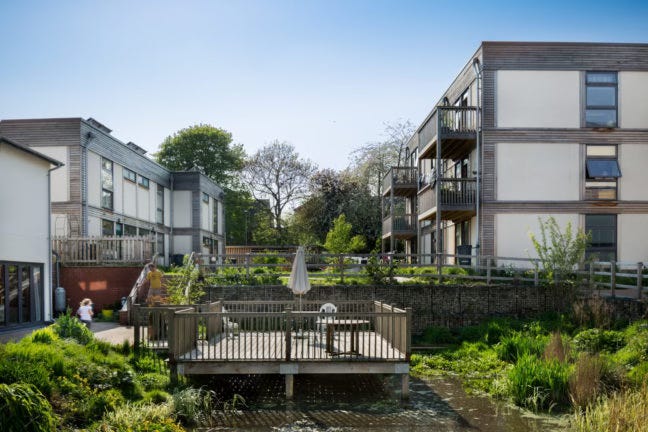
So the low impact bit is the straw. Our homes are made from naturally carbon-sequestering material: straw, timber and lime. The affordability bit is really exciting. We pegged the value of our houses to wages and not house prices. So they remain permanently affordable. So that’s a really exciting bit because in this age of housing crisis, right, where people can’t afford their housing, that’s a really exciting wow factor.
The development of the LILAC housing scheme also came with a unique funding model. It’s a model called a Mutual Home Ownership Society, or MHOS. Now it’s a little bit like home ownership, but just mutual home ownership. So what you do is you acquire the build cost of your home, so there’s no developer profit. So instantly it’s 20 or 30% cheaper because we built our own houses, right? And so we translate that debt into equity. Now each of those equity units, say for example in a house that’s £200,000 build cost and 200,000 equity shares, right? Now each of those equity shares, the value of it is linked to national wages and not house prices. So it goes up sustainably with your wage, but it doesn’t skyrocket up, so it becomes unaffordable.
But can these new ideas also be used on existing housing stock?
One of the big things is that we’re always being pushed into building new schemes, you know, like new housing developments. But actually we need to look at what’s in front of us in terms of existing housing stock. There’s going to be lots of dilapidated terraces and underused properties, especially in low income communities. Working with those low income communities to set up community-owned businesses and community land trusts so the residents themselves can be self-builders to regenerate those streets and neighbourhoods themselves, right? So investing in the people that are there, investing in the housing stock that’s there to create a circular economy, a new cycle of prosperity where you’re training people to regenerate houses. You could take a whole terrace, you could make one of them a library, you could make the end one a sauna if you want or a meeting space. You could make high-quality zero carbon living units. You could communalise the gardens and make an allotment. You could make a car park on one side so there’s space for kids to play. So the exciting thing is you could retrofit the most average street in Britain into like a whole laboratory of solutions for people.